Showing posts with label CILIP. Show all posts

Thursday, 6 October 2011

CPD23 - Thing 20 - Library Career Routes and Wisdom

Career Paths
If you are anything like me, then anything to do with career planning, career pathways, careers guidance and careers advice seems very daunting.

This is where both the Library Routes Project and the Library Day in the Life Project are such great ideas since they help to demystify some of the nature of what working as a modern day information professional involves.

Our perceptions of careers and jobs are built by our own unique mixture of experiences and by talking to friends, family, parents and teachers, learning from the media (TV, newspapers) and from reading online and books. Existing perceptions and prejudicies can be very hard to shift. Therefore these two website resources are as Laura Woods says in her overview to Thing20,  "intended to shine a much-needed light on the types of jobs and career paths available within the information profession".
I have previously contributed to the Library Routes wiki already - see my blog post to CPD23 - Thing 10 - Routes into Librarianship.
Do you think your own path was typical or unusual compared to others?
Having a nose around at other contributions, I'm probably one of the few people who actively pursued a career in library and information work, compared to most other contributors who seems to have stumbled a lot more into this career path.
I'm also one of very few contributors from a government or special libraries background (not because there aren't people like me out there but presumably because less people working in these areas are aware of the wiki).
This raises the question of what we can all do to actively promote what it really means to be an inforamtion professional and the value of information management and libraries beyond what Ned Potter and Laura Woods call the 'echochamber' of talking about being a librarian and libraries to ourselves.  That battle is not yet won!

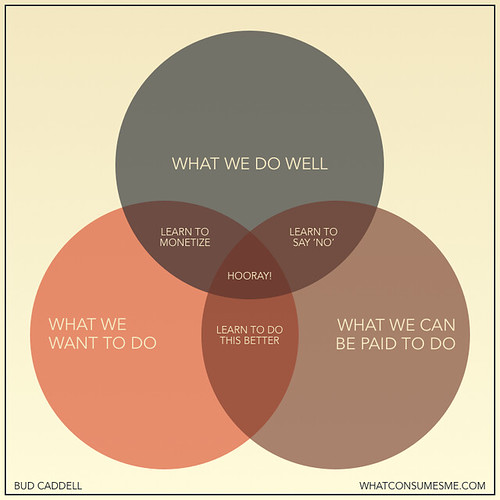
Words of advice
True words of wisdom!
My first top tip is that if you get the opportunity, do try to find a job via the CILIP graduate traineeship scheme.
This is beneficial to both employers who are seeking enthusastic graduates looking to find experience in information and library work. It also works vice versa for those same graduates who are looking for real-life working experience to demonstrate work commitments and to start to earn money. CILIP clearly indicate that those who are successful in securing a traineeship are looked on favourably if they then decide to apply for a CILIP accredited course. You have to be organised in applying for these roles, but opportunities do appear throughout the year and they are very varied to suit all personalities and backgrounds (and maybe get your foot in the door with an employer). They are also a competitive job-seeking process, so be prepared for submitting your CV and interviews. To get an idea of some graduate trainee schemes you can check out the websites run by graduate trainees working at Cambridge University (CATALOG), OWL: Oxford Website for Library Trainees and the Albert Sloman Library Assistant pages. Remember these are only three possibilities from around 70 opportunities advertised annually.
Being a graduate trainee definitely helped me with Plan A - ie applying for a Masters in Information Management and finding a full time job.
However, you should also always be prepared for a Plan B (or even C or D) as you come to appreciate the older you get that life is not always straight forward and plain sailing.
By the time you have been around for longer in an organisation and you get associated with a particular job, position or role (particularly if you work in a larger organisation), the more closely you are associated with your existing skillset. For all the talk of the possibility of changing sectors, I personally think that unless you move around when you are a 'newer' or 'younger' professional, the harder it will be disassociate yourself from your perceived skillset later. Be prepared to reach an invisible 'glass ceiling' mid-point in your career and plan for that.
Whatever propelled people into their current situation, I'd also advise everyone to:
  • continue to keep flexible and current with new technologies and ways of working
  • volunteer to undertake new work and activities
  • be positive as long as possible and avoid listening to cynical voices
    Wish I had one of these!
Also be open to all the wisdom of others. Here are some words to ponder:
  •  "Analyzing what you haven't got as well as what you have is a necessary ingredient of a career" - Orison Swett Marden
  • “I've missed more than 9000 shots in my career. I've lost almost 300 games. 26 times, I've been trusted to take the game winning shot and missed. I've failed over and over and over again in my life. And that is why I succeed.” - Michael Jordon
  • "What is the recipe for successful achievement? To my mind there are just four essential ingredients: Choose a career you love, give it the best there is in you, seize your opportunities, and be a member of the team.” - Benjamin F Fairless

Friday, 2 September 2011

CPD23 - Thing 15 - Event participation

In Thing 15 we are encouraged to think about our involvement in seminars, conferences and events in all their glorious technicolour.
A suitable alternative sub-title would be Why Don't You Just Switch Off Your Television Set and Go Out and Do Something Less Boring Instead?'. Some of you may remember that this was a cult BBC children's TV programme from the 1980s. To be reminded of your mis-spent youth, see: http://www.bbc.co.uk/cult/classic/titles/whydontyou.shtml

I've done just what it says on the tin and been fortunate to participate in a number of events, either by attending or organising. In particular as:

Attendee
  • Aerospace and Defence Libraries Group (ADLG) conference in 2009 
  • CILIP's Umbrella 
  • IFLA's World Libraries Conference held in Durban, South Africa in 2007
There is a tendency to think that being an attendee at an event is equivalent to having a day off. In fact, conferences and events are hard work in themselves if you are truly to make the most of them - by networking, listening hard, asking the right questions. Having said that you should take a balanced approach about pacing yourself throughout the day (and evening if the event runs over a few days).

As a conference attendee, I've always tried to reflect and share on my learning experiences. However, there is always more that I could do better, such as being more prepared in advance and asking more questions. This and other suggestions are offered by the writer and speaker Scott Berkun in his blog post - 'How to get the most out of conferences'.

Organiser
  • Network for Government Library and Information Specialists (NGLIS) conference on "Do Information Professionals have the key to the door?" in April 2011.
I was slightly reluctant to put my name forward to help with organising this, but it is one of the activities I've been most proud of recently. It provided an opportunity to learn new skills, for instance liaising with suppliers. And I learnt that I can be a bit of a control freak.
By actually organising an event, you really feel you are making a much bigger difference.

I am now looking forward to getting involved in planning the 2012 Government libraries conference and making it even more successful than before.

Presenting

At the moment, I would classify myself as a 'presenting virgin'. I've only had a chance to present at one 'biggish' conference, at a work related Export Group for Aerospace and Defence Annual Meeting in October 2010. I jointly presented together with my manager about export control awareness training and activities.

Given the opportunity I'd like to find many more chances to present although I'm sure to be quaking in my boots and am sure to feel under prepared.

I'm inspired by Lisa Cotter and Donna Robertson, two Australian health librarians, on presented a paper on 'Presenting at a conference - you CAN do it!' and by the experiences of those who've presented at librarian New Professionals Conferences.

Now I just need to find the right events...

Thursday, 4 August 2011

CPD23 - Thing 10 - Routes into librarianship


Thing 10 is all about sharing and blogging about our experiences in library and information work to date.
I took quite a traditional route into library and information work by going through the stages of:
  1. Studying for an arts/humanities undergraduate degree
  2. Working as a Graduate Trainee after successfully applying and securing a one-year traineeship at a university library as part of the CILIP Graduate Training Opportunities scheme (or SCONUL programme as it was known in my day - does that show my age?)
  3. Studying for Masters on CILIP accredited course at City University
  4. Starting first professional post in government information service
  5. Achieving Chartered Member status of CILIP
  6. Continuing to progress through my organisation and build up my skills and experience
I was interested in library and information work from quite young - at the very least since working in my school careers library and getting careers advice. I also remember a personality and careers advice test once which recommended a number of possible future careers including becoming a solicitor, arts administrator and a librarian. In fact, I might have had the idea even younger when I loved going to my local library and organised my bookshelves at home in alphabetical order!

I originally applied for the graduate traineeship and to study for the Masters because I was interested in a versatile and flexible career. On the whole, this has been in the case for me. I've had lots of opportunities so far despite mainly working for the same employer within a large central government department. Via my career and jobs I've had the opportunity to deliver training overseas, work with companies, give presentations, organise events, use modern technology, make a difference to the UK economy - which I would never have thought of doing when I first thought originally about librarianship and information work.

I've also moved away from the 'traditional' concept of a librarian (if such a person or concept really exists). Working as an information professional is all about people, customer service and enabling people and organisations to succeed.

I've been mostly happy with my choices so far.

If interested you can read my Case Study on the Info Professional website. The Info Professional website is a site set up the Museums, Libraries and Archives Council (MLA) and Lifelong Learning UK to provide the inside take on library and information careers - taking you places you've never imagined - so definitely worth a look if you are new or young professional. You might also want to check out the Library Routes Project wiki which provides a forum to share your experiences in the library and information profession. I've just added this posting to the wiki. Why not share your experiences or read those of others as well?!

My challenge now is the big what if....what next? To be honest the answer is, I don't exactly know apart from a desire to progress, move on and learn new things, get paid better and become more professional.

Monday, 25 July 2011

CPD23 - Thing 7 - Face to Face Networks and Professional Organisations

Being an active member of a professional organisation has always been very important for me.

I've been a member of CILIP since my student days and still retain  membership. I am fortunate, however, that currently my employer pays my membership subscription, which is a continuing incentive to remain a member. Would I stay a member if not? Probably and if I didn't I would probably explore joining other groups.

In 2002 I joined CILIP's Career Development Group and became actively involved in the London and South East Divisional committee, firstly as Events Co-ordinator and then in 2009 as Chair.

More recently I have got more involved with the Network for Librarians and Information Professionals (NGLIS) and was the Conference Organiser for a 'highly successful' joint government libraries conference held in April 2011.

Via my active involvement in professional groups, I've had the chance to travel to the IFLA World Libraries Conference in Durban in 2007 (thanks to being awarded a CILIP grant) - something that I wouldn't be able to have done as part of my job.

Being actively involved in professional networks and groups has also increased my self-confidence, given me the opportunity to learn new things such as event planning and financial management, relate to others outside my day job and therefore expand my professional contacts and horizons.

Another invaluable learning point about being on a committee is that you are highly likely to work in association with people with a range of skills, personalities, motivations and differing senses of commitment. Sometimes you need to develop a thick skin to deal with people who might clash with your differing approach and this way you learn more much quicker how to handle people, situations and opinions in a 'political' sense.

In June 2009, I had an article published in the CILIP Update Journal about the benefits of getting practically involved in professional organisations. The article was titled "Don't just sit there, become a Chair" (published in CILIP's Library and Information Update magazine - June 2009 - http://edition.pagesuite-professional.co.uk/launch.aspx?referral=other&pnum=&refresh=6Yp107As9k1C&EID=ecb9146e-601b-4ae8-afce-1c4e408148b4&skip=) which was all about getting involved in professional committees. There are so many ways to get involved and more often than not you will be welcomed with open arms.

When I applied for my current job, being able to draw on my professional involvement and activities was a definite plus point. And I continue to try to stay involved when I can, subject to other commitments. Continuing to stay involved keeps me balanced in relation to my job - particularly when I am looking for fresh challenges. (And I'm not alone as highlighted by one of many job articles about the benefits of getting involved with professional organisations published on the Jobsite website)

In many ways, I guess I just like joining groups and having a sense of participating - it feels right and above all I get enjoyment out of being involved.

However I do appreciate why so many people are reluctant to get involved such as a result of time pressures, more focus on paid work, lack of interest, or feeling introverted/shy. Another reason why people might seem less inclined to actively participate in face to face networks or professional groups is because they feel they are out dated and don't see any dynamism or relevance to them. A general sense about fragmentation across the information professions might give people a sense that it is not worth their time in getting involved in professional networks.

I'm now at a particular stage in life where I am rethinking how to be involved professional and how to build up new skills. One area that interests me is mentoring other professionals, so do get in touch if you have any queries...

Friday, 24 June 2011

CPD23 - Thing 2 - Investigate some other blogs

Well, I've gone out of my comfort zone and actually commented on some blogs. Its like putting your head above the parapet and feeling exposed.
I looked at a number of other blogs and found a surprising amount of consensus about reasons for involvement. Quite a few of my fellow CPD23ites have only dipped a small toe in the blogging pool and are tentatively finding their way around. (= snap that's exactly how I feel).

I've learnt that by the simple act of commenting you:
  • Give to others 
  • Generate new ideas
  • Get practice in writing 
When I first started my blog, I tried to hide it under a bushel - but this goes against its whole ethos. Blogging is all about conversation and relationships. And now I'm inspired to put my blog forward to be listed as a Cilip Blogger. Hopefully this will spark new contacts and opportunities further down the line. 

Still though a number of questions remain floating around in my head - such as:
  • Do you get more hits by making critical comments?
  • Should you be the first to comment?
  • How much time and effort should you spend in commenting?
  • Who really has the motivation to comment - is it always the same people?
If you have the answers to any or all of these questions please let me know. 
However, what I secretly enjoyed, just as much as commenting was marvelling at the creativeness and attractiveness of the bloggers taking part in the CPD23 programme - who can but marvel at blogs with titles such as 'Aude Sapere', 'Simple Things to Make Do and Mend', 'Digressions of a Sponge for Knowledge' or 'Diarrhoea of a Madwoman' - brilliant!


Powered By Blogger